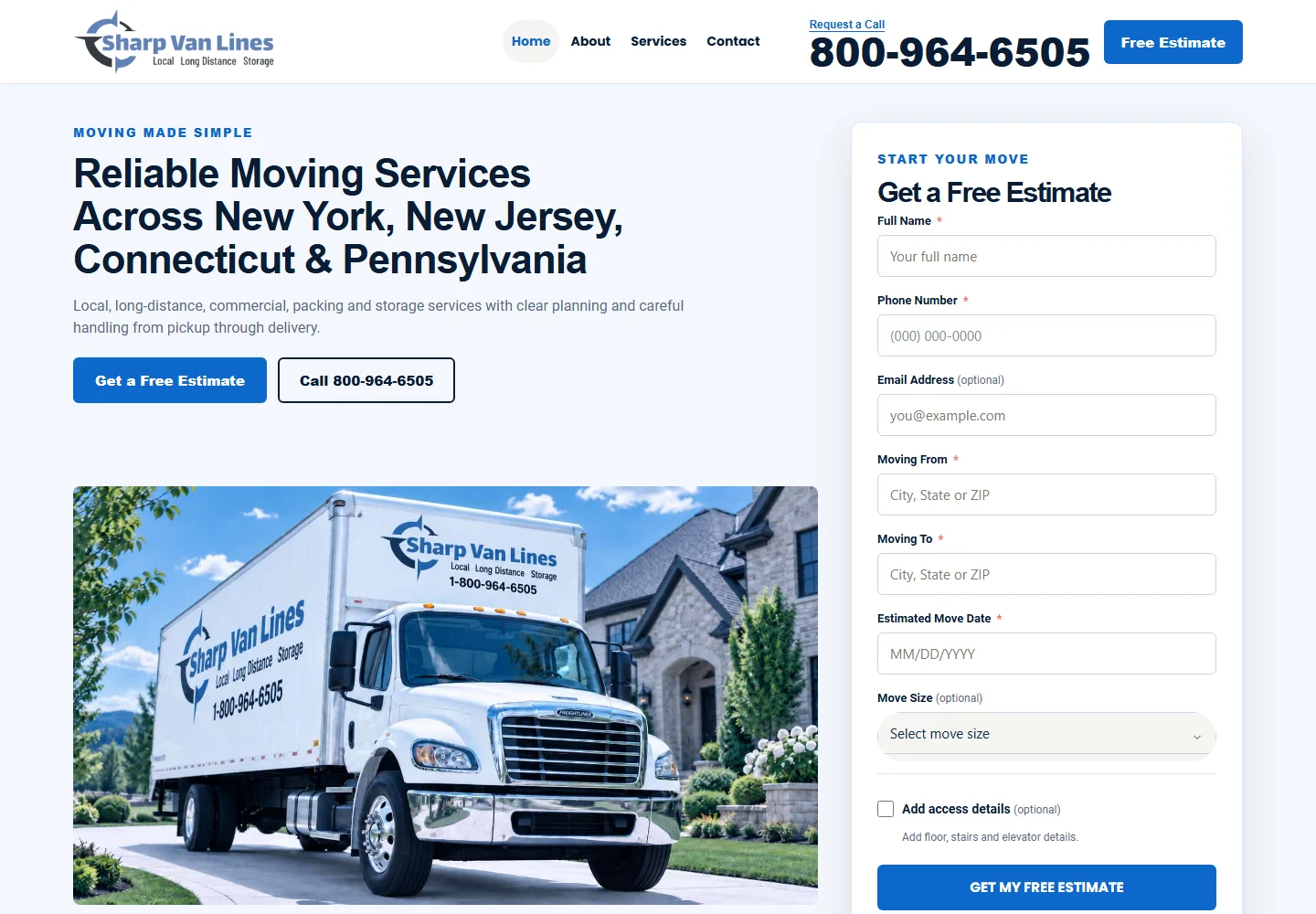
Moving services
Sharp Van Lines
Website design & development
A complete moving-company website with dedicated service pages, moving-enquiry forms and clear access to customer information.
Visit website →

WEBSITE DESIGN & DEVELOPMENT
SEOTEC designs and develops business websites, ecommerce stores and campaign landing pages. We bring content, design and technical requirements into one project, with the platform chosen to suit your business. Whether you need a new site or a considered rebuild, the goal is a clear, capable website that presents your business properly and makes the next step easy.
Discuss your websiteA visitor considering your business needs more than a good first impression. They need to understand the offer, find the information that makes a decision possible and know what to do next. That might mean requesting an estimate, choosing a product or responding to a specific campaign. The website should help that decision along without making people assemble the answer from scattered headlines.
We start with those requirements: your audience, your services or products, the information customers need and the actions the site should support. That gives the design a purpose. A detailed service page, a product collection and a focused landing page each have a different job, and their layouts should reflect it.
The result should also make sense for the people maintaining it. Who will update the pages? How often will you publish? Which tools must connect to the site? Those questions help determine the platform and the build, rather than becoming surprises after the design is approved.
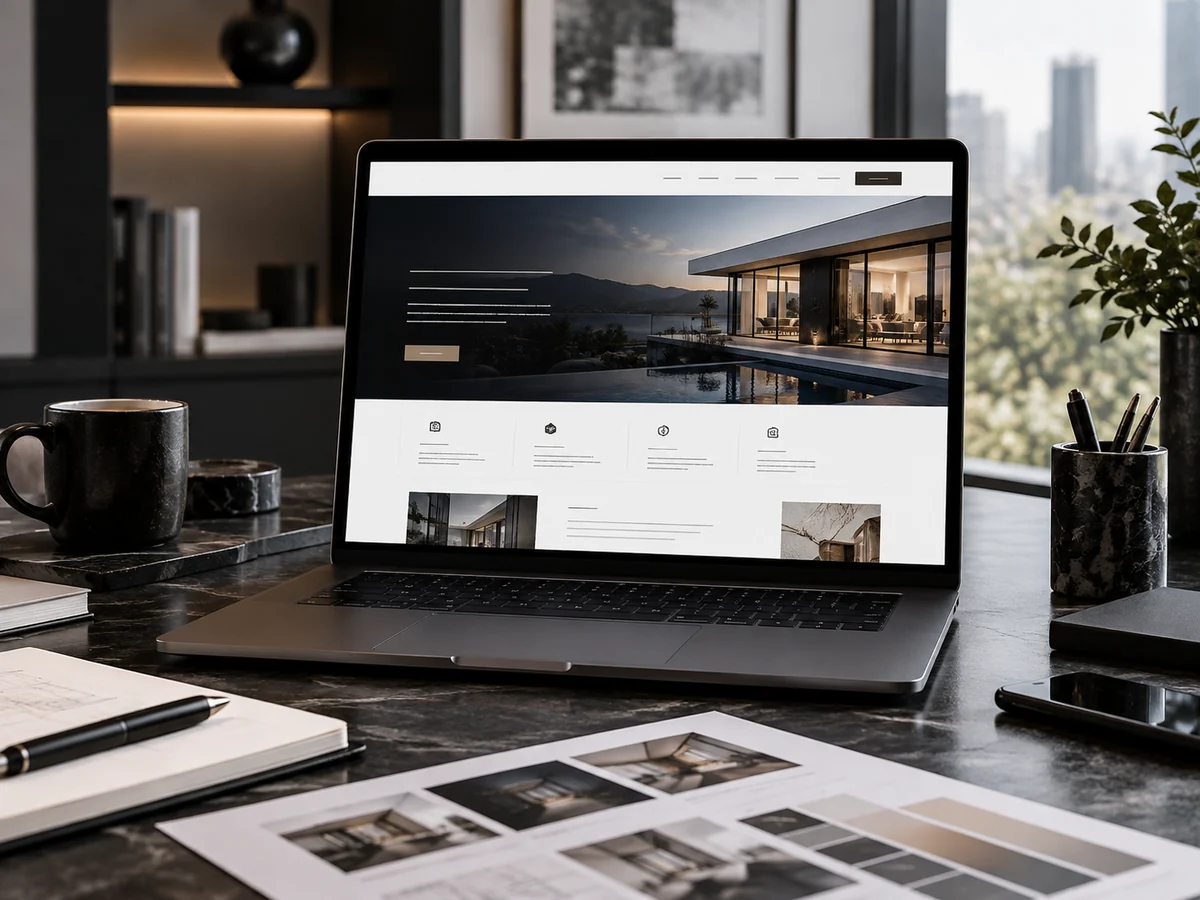
WordPress and static development are preferred approaches for many of our business-website projects, not the limits of what we offer. Your preferred platform and any existing setup are part of the brief. For an online store, we also consider the catalog, order management and buying process alongside design and publishing.
WordPress is a strong option when you need to manage pages and publish articles through a familiar administration area. We can develop an individual theme around your approved design, with templates and reusable sections for the content your business actually needs.
Custom development is not limited to changing colors on a purchased layout. It can shape how service information, project details, testimonials and articles are presented, while giving you sensible controls for everyday updates. WordPress block patterns let reusable groups of content blocks form part of that editing system.
For example, adding a project should mean entering its description and images into an appropriate layout, not rebuilding the page design from scratch. The editing options need to be demonstrated as part of the project, so you know what you can change yourself and what still requires development.
A custom theme is useful when it provides a better fit or a simpler way to work. We do not treat writing everything from scratch as an achievement in itself. Existing tools can be valuable when they meet the requirement and remain manageable.
A static build produces the page HTML before a visitor requests it. The server delivers those prepared files rather than running a CMS to assemble each page. For a business that prefers managed updates, this can be a straightforward way to maintain a carefully designed site.
Static does not mean one page, no blog or a design that cannot change. Shared templates and structured content can support service pages, articles and a growing knowledge library. An update is made in the source, checked and released as a new build.
The trade-off is the publishing workflow. A static build does not automatically include a WordPress-style editor. Forms also need a separate handler, and accounts, live transactions or personalized information require additional systems. We work out those needs before recommending this approach.
| Your requirement | A direction to consider | What we clarify first |
|---|---|---|
| A service website you can edit yourself | WordPress with appropriate templates and editing controls | Which updates you will make and which need development |
| A content-rich business site with managed updates | A static build or WordPress | Who prepares, checks and publishes each change |
| An online store on a hosted commerce platform | Shopify or BigCommerce | Catalog structure, theme requirements, apps and checkout constraints |
| An online store built around WordPress | WooCommerce | Product requirements, integrations and ongoing maintenance |
| A focused page for a campaign or offer | A landing page within the existing platform or a separate build | The visitor's intended action, destination and tracking requirements |
These are starting points, not rigid rules. A landing page is a type of page, not a competing CMS, and a static frontend alone is not an order-processing system. We choose the combination that fits the project.
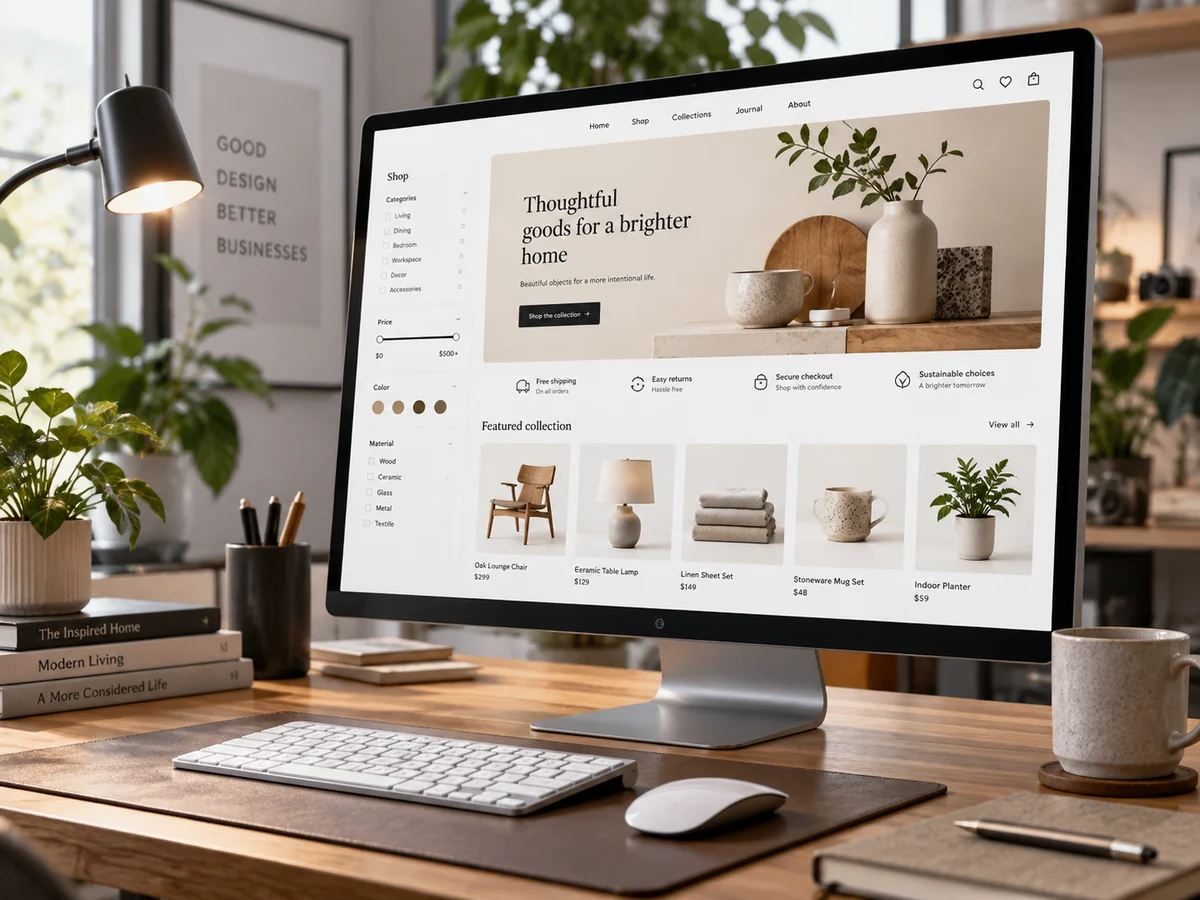
An online store has to do more than display attractive product cards. Customers need to understand the range, compare options, find delivery and return information and complete a purchase. The business needs a manageable catalog and a clear way to maintain it.
For ecommerce projects, we consider platforms such as Shopify, WooCommerce, BigCommerce, Magento Open Source, Adobe Commerce, PrestaShop and OpenCart. The right fit depends on your catalog, required integrations, budget and how you want to manage the store.
The work can include storefront design, theme customization, product and category layouts, navigation, content and the connections needed for the agreed sales process. We define that scope around the actual catalog and customer journey.
For Shopify, we assess the existing theme, the changes the storefront needs and which requirements depend on apps or supported platform features. For WooCommerce, we also assess the WordPress setup, hosting and maintenance responsibilities. Neither approach should begin with a list of extensions to install before the business requirements are understood.
Consider a customer choosing clothing: the product page may need to explain fit, sizing, material and available options before asking for the sale. A different catalog might need compatibility details or technical specifications instead. That is why product structure, content and design need to be planned together.
Checkout changes, subscriptions, inventory connections and other specialist requirements are assessed before they are promised. The platform, plan and integration can affect what is possible and what must be budgeted separately.
Already using another platform, or have one you would prefer? We can review it, assess the work and agree a practical scope before committing to the build. We do not require a platform change simply to match our preferences; we first look at whether the existing setup can support your goals.
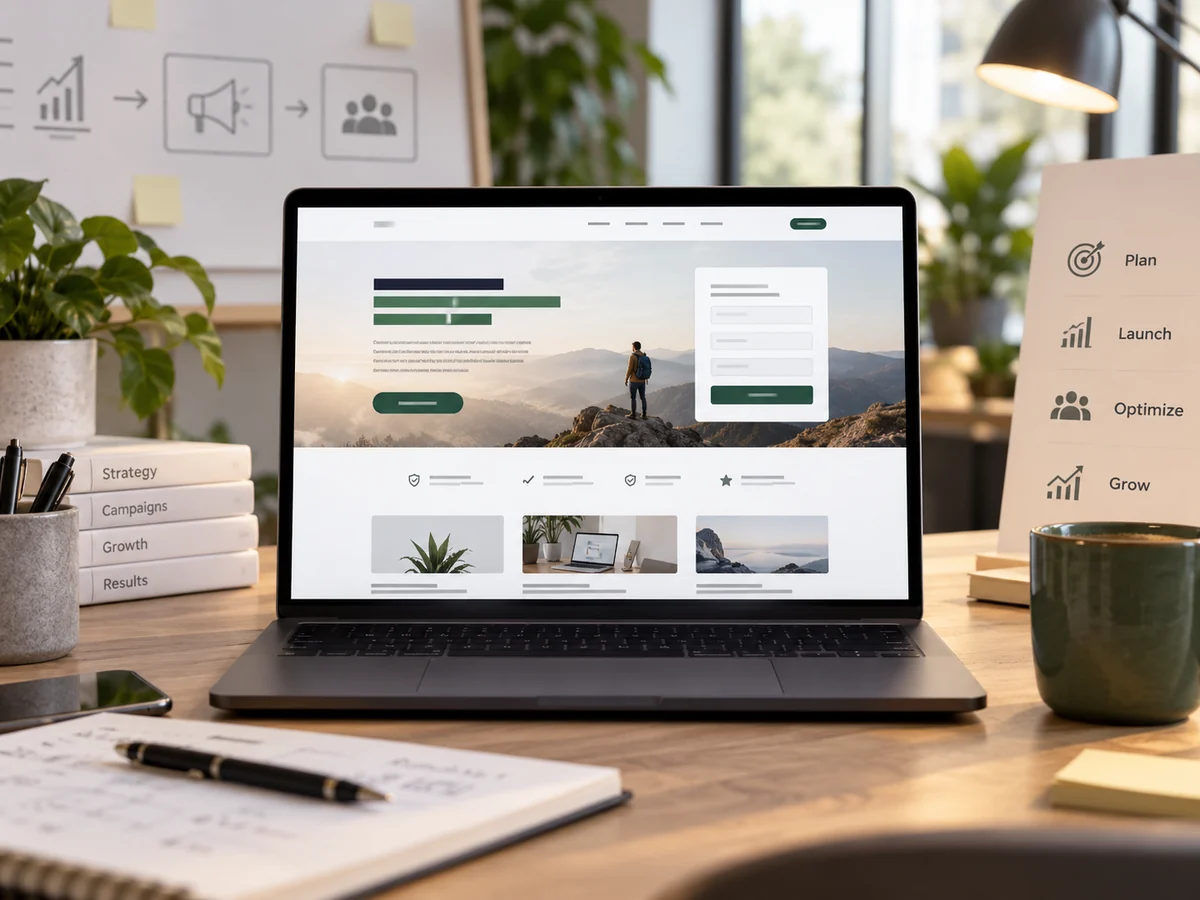
A campaign page should continue the conversation that brought someone there. We create landing pages for a particular service, offer or product, with relevant information, evidence and a clear action rather than a reduced copy of the entire website.
The starting point is the destination: an inquiry, a booking, a product purchase or another agreed response. We align the page's message and layout with that action, give visitors the information they need and remove distractions that do not serve the campaign.
A landing page can use the business's existing platform or a separate build where there is a practical reason. Tracking, form delivery, links to the next step and any testing requirements belong in the scope. Creating the page does not automatically include running the advertising campaign or promise a particular conversion rate.
The homepage introduces your business; it should not have to explain every service or product in full. We plan the structure so that each important offering has room for its own explanation, proof and next step. Where supporting guides or articles are useful, they connect to the relevant service or product collection rather than sit in an unrelated content archive.
This is also where we separate useful depth from repetition. A page about a particular service should answer questions that matter to that decision. Creating several near-identical pages with different titles does not give the visitor more to work with.
The technical SEO foundation follows that structure: accessible page content, descriptive titles and headings, internal navigation, appropriate indexing settings and structured data based on real business information. These are development requirements, not a promise of a particular search position.
Content planning and writing can be included in the agreed scope. Existing material is reviewed before being reused, with your business facts and final wording approved before publication. A well-built site provides the foundation for ongoing SEO; it does not replace the work of developing and improving its content over time.
We approach performance through the things visitors experience: how quickly useful content appears, how promptly controls respond and whether the layout stays steady while they read. Google's Core Web Vitals measure these different aspects of page experience.
The work can include preparing images at appropriate sizes, reducing unnecessary scripts, controlling font loading and reviewing delivery and caching where the platform gives us control. An oversized hero image and an unnecessary third-party widget are different problems; they deserve specific fixes, not the same extra plugin. A hosted commerce platform requires a different approach from a server we manage.
Testing also needs context. A controlled browser test is useful for diagnosing a page, while available real-user data shows how people have experienced it across different conditions. We keep those findings separate rather than treating one score as the whole story.
A perfect score is not a substitute for a usable page. The mobile review needs to include readable text, navigation, keyboard focus, form labels and controls that people can comfortably use. Hosting, third-party services and later content changes all remain part of the performance picture.
A redesign should begin with a look at what is already worth keeping. That may include a service page attracting inquiries, an article with useful links, a client recommendation or a document people still need. A new visual identity is not a reason to discard them.
For a rebuild, we review the existing pages and available search data before settling the new structure. Useful addresses can stay in place. Where an address genuinely needs to change, the old and new pages are mapped so that a redirect takes people to the relevant destination, not indiscriminately to the homepage.
For an online store, migration also means deciding which product records, collections and other business data must move, what the destination platform can accept and how the transfer will be checked. The launch plan distinguishes the website from business email and other services attached to the domain. Their settings should not change merely because the website does.
Google's guidance on URL moves makes clear that search visibility can fluctuate during a migration. Planning, redirects and post-launch checks help manage the transition; they are not a guarantee that every position will remain unchanged.
A contact form is useful only when the inquiry reaches the intended destination. We plan the fields around what you need to respond, then check the complete route: input validation, error messages, successful acceptance and delivery.
That means distinguishing “the visitor clicked Send” from “the site accepted the inquiry,” and checking delivery separately. It also means testing what happens when something fails. A reassuring message should describe what the system actually did.
For an online store, the corresponding check is the agreed purchase journey: selecting the correct product option, adding it to the cart and reaching a supported checkout. Order and notification tests are planned for the approved test environment. Booking tools, mailing platforms and other connections are scoped around the systems you use. Required accounts, access and third-party costs need to be clear before integration, not discovered at handover.
THE PROCESS
We review your goals, current website and available materials. The scope identifies the pages, content work, functionality and responsibilities, including anything that needs separate investigation. You should know what is being built and what information is needed from you.
The page plan and key layouts establish how the site will communicate. Reviewing real content in those layouts helps reveal problems early: missing explanations, awkward navigation or a design that has no room for the material visitors need.
The approved direction becomes reusable components and functioning pages. You review a test version before launch. The work is checked across relevant screen sizes, with attention to content, navigation and the actions the site is supposed to support.
Before release, we check the agreed functionality, key links, launch settings and any planned redirects. The release includes a recovery plan and a clear handover. After launch, the important pages and agreed inquiry or purchase routes are checked on the live site, not only in the development environment.
SELECTED WORK
Different industries, different requirements. These projects show complete website design and development for local services, travel, education and film.
Moving services
Website design & development
A complete moving-company website with dedicated service pages, moving-enquiry forms and clear access to customer information.
Visit website →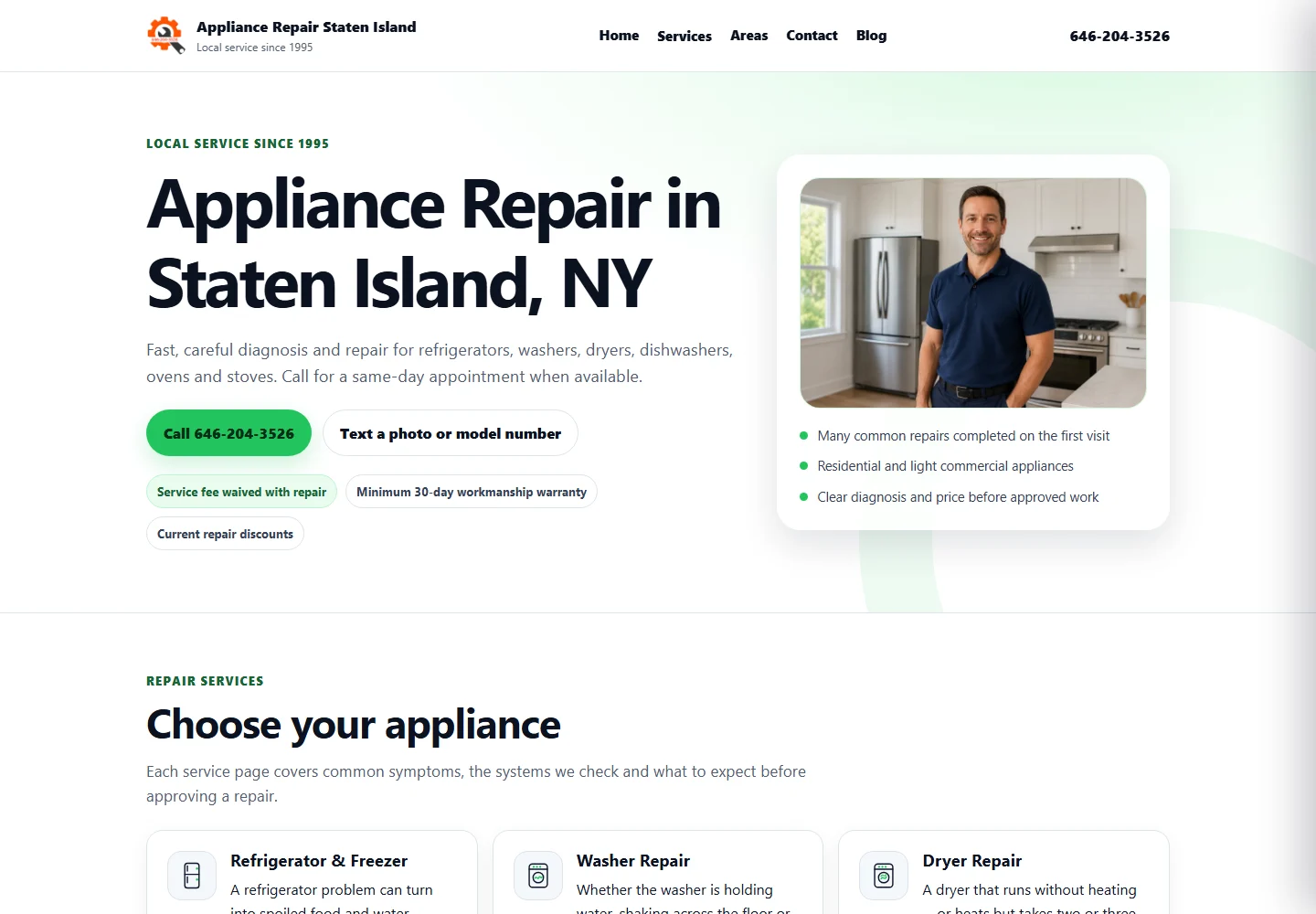
Local home services · Static website
Website design & development
A custom static website for a Staten Island appliance-repair business, with dedicated service pages, clear local coverage and prominent call and text options.
Visit website →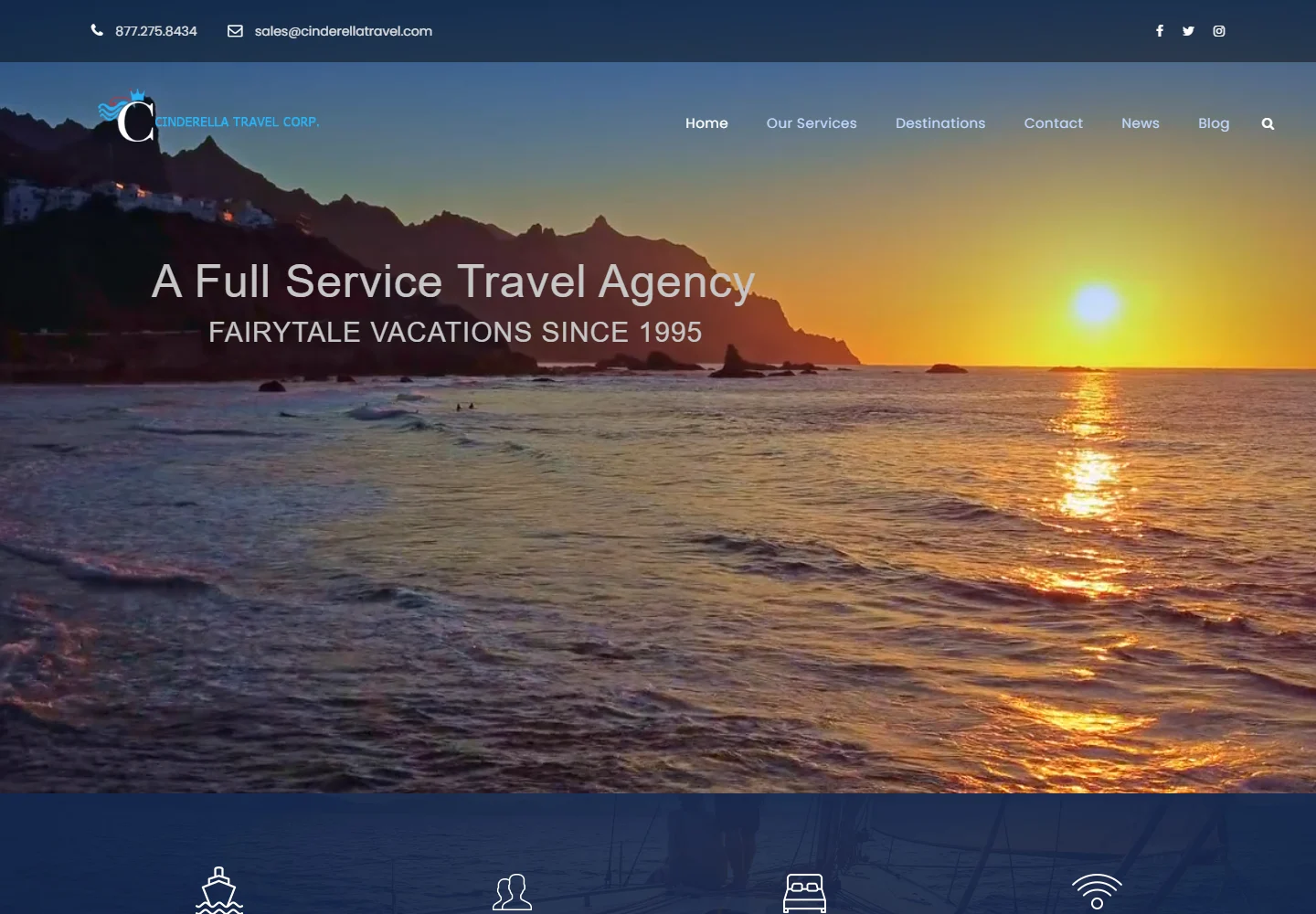
Travel & hospitality
Website design & development
A full website for a travel agency, bringing services, destinations and contact information together with a photography-led presentation.
Visit website →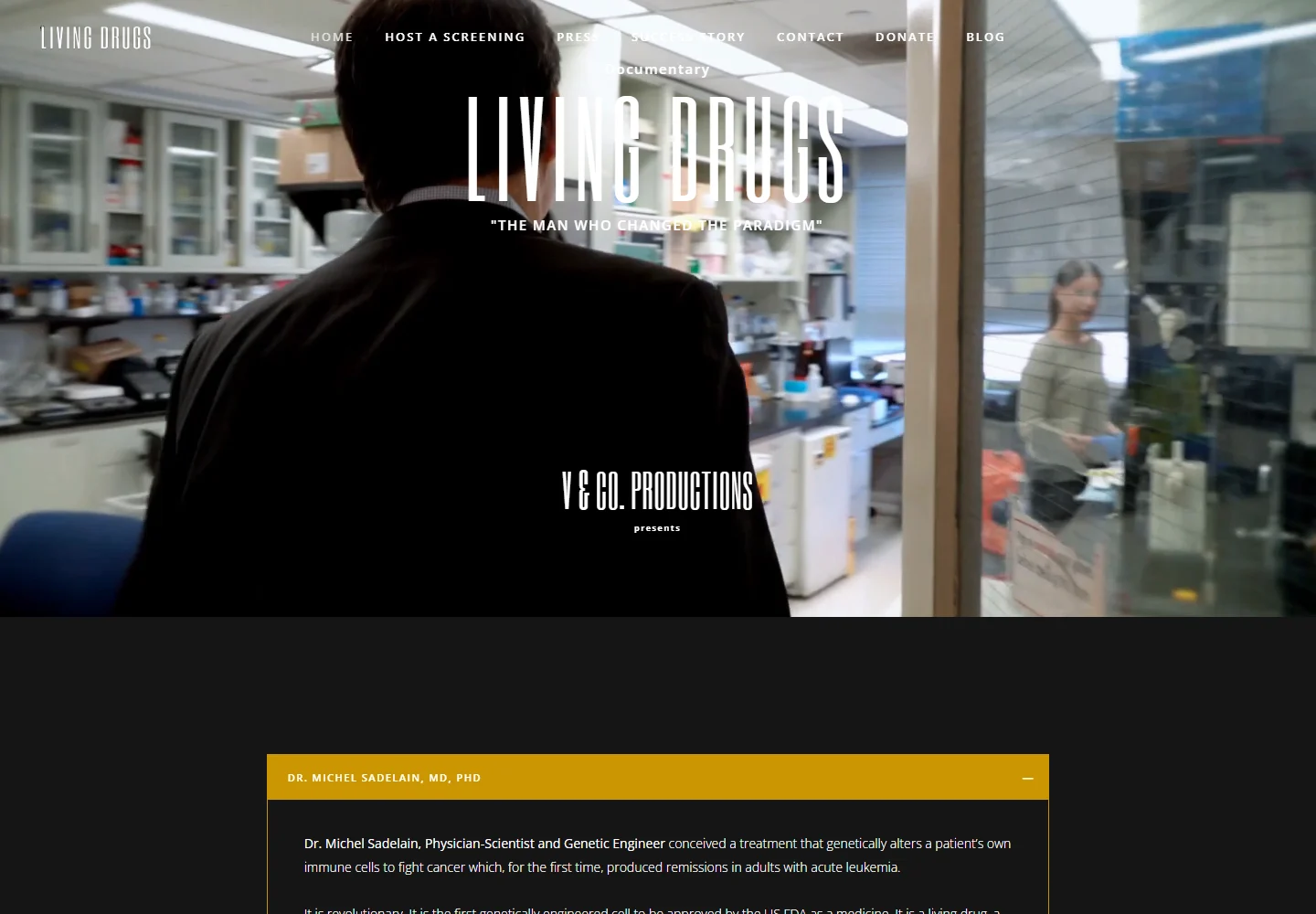
Documentary film
Website design & development
A dedicated website for a documentary, combining the film’s visual identity with screening information, press resources and contact routes.
Visit website →IN OUR CLIENTS’ WORDS
“His company LSY Rite Tech (seotec.us) built for my barber shop a solid website for a very fair price and has optimized it to attract more clientele online.”
 Client recommendation
“Sergey and his company developed our website and have provided services with search engine optimization and Internet marketing.”
 Client recommendation
The handover should leave you with a website you understand, not a collection of unexplained logins. We define the deliverables during scoping: the completed pages, appropriate source files and access, instructions for the agreed update workflow, and a record of third-party services or licenses.
For WordPress, that includes knowing how to make the routine edits provided by the build. For a static site, it means a documented route from a content change to a checked release. For an ecommerce project, it includes the agreed catalog and storefront update workflow, available theme access and a record of the apps or extensions in use. It should also be clear who is responsible for platform subscriptions, hosting where applicable, backups, software updates and future changes.
Ownership and licensing are made explicit. Third-party software, photography or fonts may carry their own terms; they should not be presented as exclusively owned custom work. Ongoing maintenance and content work are defined separately from the initial build unless included in the proposal.
Two websites with the same number of pages can involve very different amounts of work. A repeatable service layout is not the same task as a custom integration, a substantial content rewrite or the careful migration of an established site.
The estimate considers the design requirements, page types, content readiness, functionality, migration needs and the review process. For ecommerce, catalog complexity, product options and integrations also matter. An existing site with useful content and clear ownership of its accounts presents a different starting point from a project that needs those foundations rebuilt.
The proposal sets out the scope, stages and responsibilities. Hosting, paid tools, additional writing and ongoing services should be identified rather than hidden inside a vague package. A useful budget conversation starts with what the site must do and which parts can sensibly follow later.
No. We assess your preferred platform alongside the design, catalog, integrations, budget and editing requirements. WordPress and static builds are useful starting points for many business sites, and ecommerce has other suitable options. A platform change is recommended for a practical reason, not simply to match our preference.
The editing workflow is agreed before the build. A WordPress project can include templates and controls for routine updates; a static project needs a defined publishing process. We demonstrate the agreed workflow at handover rather than assume every type of site includes the same administration tools.
We plan the redesign around useful existing pages, content and addresses. Where URLs must change, we prepare relevant old-to-new mappings and check the transition. This helps preserve valuable history, but no migration plan can guarantee that every search position will remain unchanged.
Cost follows the work required: design, page types, content, functionality, integrations and migration. Two sites with the same page count can need very different builds. The proposal identifies deliverables, responsibilities and any separately priced services or third-party costs.
Tell us what you need to change, who the site needs to reach and what visitors should be able to do. Bring your current website and whatever useful content or brand material you already have. You do not need to arrive with a finished technical specification.
Discuss your websiteYour goals, your audience and what your website needs to do.
Google Analytics uses regional privacy settings.