
SEOTEC SERVICES
SEO & Local Search
Be found for the work you want to do.
Search should connect your business with people looking for something you actually offer. SEOTEC brings technical SEO, useful content and local visibility into one program, with priorities based on your website, your customers and the work you can deliver.
That might mean making an established service page easier to find. It might mean removing a technical obstacle, improving a confusing site structure or developing an editorial subject your competitors have left poorly explained. We start by finding the work that matters, not by selling the same monthly checklist to every business.
Start with the business, then the keywords
A page can attract traffic without attracting the right inquiry. Before deciding what to optimize, we establish which services, products, locations and customer questions belong in the program. Your priorities shape the research: the work you want more of, the markets you actually serve and the information customers need before choosing you.
The output is a focused map of opportunities. Existing pages receive a defined role. Missing information is identified. Topics that belong together stay together, instead of becoming a collection of competing pages built around small wording differences.
For a local service business, that may produce a small, well-connected set of service pages. For an ecommerce brand, it may involve collections, product information and an editorial library. The scale should follow the business, not a content quota.
Technical SEO that leads to a fix
Technical review examines whether important pages can be reached, understood and used. We review crawl and indexing controls, canonical signals, internal links, redirects, metadata, rendered content and the behavior of important templates.
An audit is useful only when it helps someone act. Findings should state the affected page or template, what is wrong, why it matters and what the next step is. We separate sitewide issues from isolated defects and prioritise work by likely business relevance, implementation effort and the risk of leaving it unresolved.
Where the agreed scope includes implementation, we can work on the site rather than leave you with an unexplained spreadsheet. Where another developer owns the platform, the handover should be specific enough to implement and verify.
A migration or redesign needs particular care. Existing useful URLs, links and content are assets to account for, not clutter to delete for a cleaner diagram. Any URL changes require an explicit map and a release check.
Service pages with something worth reading
A service page should explain the service. Who is it for? What is included? What happens after someone contacts you? What information affects the scope or cost? What should a customer know before deciding?
We develop pages that answer those questions in a way that reflects the business. Clear headings, relevant examples, useful images and a sensible next step do more work than a long list of place names or repeated keywords.
The same principle applies to existing content. We identify pages that need a clearer purpose, better explanations or a stronger connection to the rest of the site. Some need a substantial rewrite; others need one precise correction. Good material is preserved rather than replaced automatically.
Read more in Service pages and supporting content.
Local visibility built around the real service area
A local program brings the website and the business’s public information into agreement. We review the service descriptions, contact details, stated hours, real coverage area and the information available through the Google Business Profile, where applicable.
Location content should help a customer, not merely swap one neighborhood name for another. A separate page needs a separate purpose: a real location, a distinct service requirement or useful information that does not belong on an existing page.
We also look at the route from discovery to inquiry. Can someone on a phone understand the service, see whether the business covers their area and contact the right person without hunting through the site? A visible telephone link is useful; knowing whether the resulting calls are relevant is better.
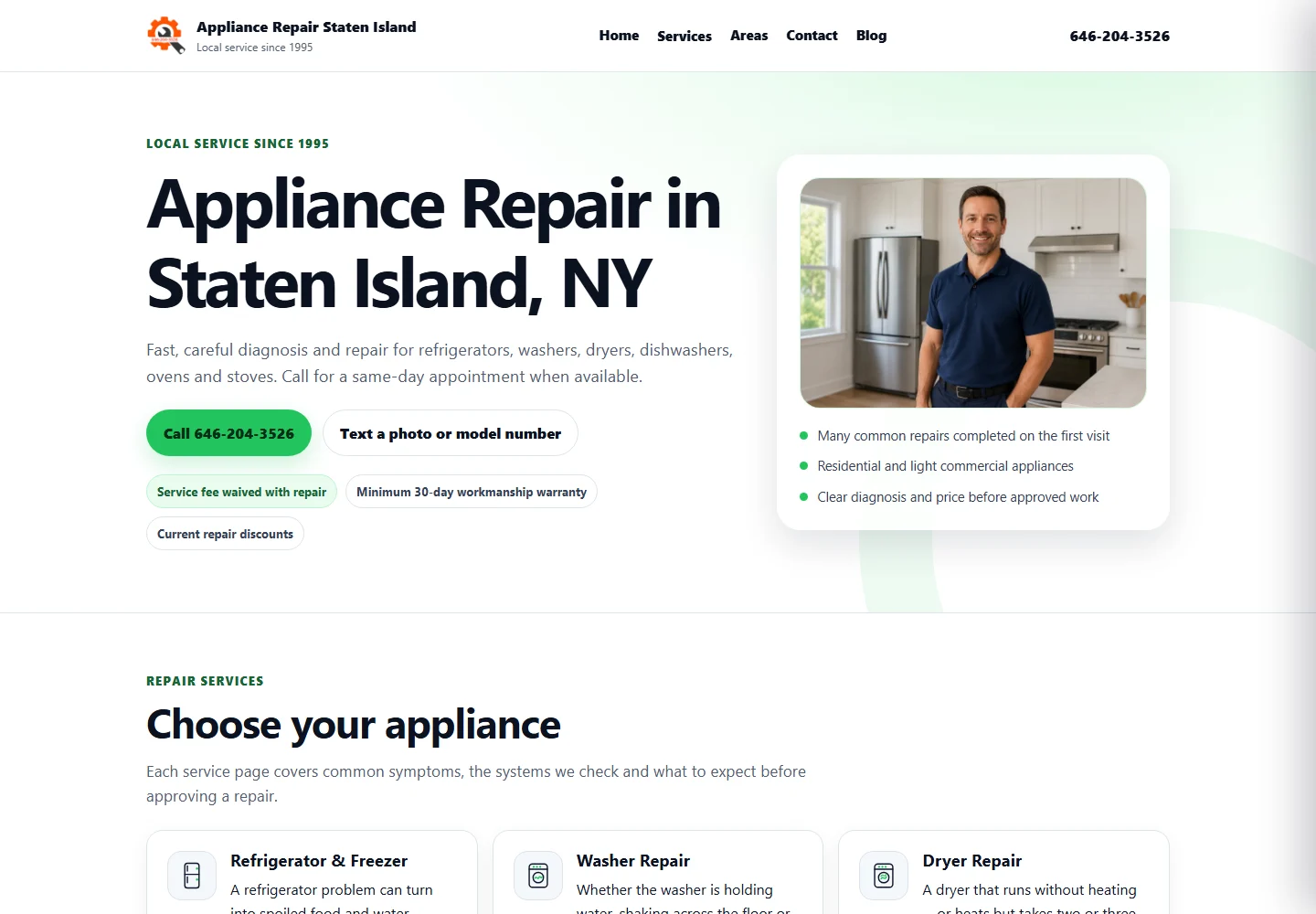
Our portfolio includes a static website for Appliance Repair Staten Island, with dedicated service pages and direct call and text options. It is an example of website implementation, not a claim of a measured SEO uplift.
Supporting content with a clear job
The questions around a service or product do not all belong on its main page. A supporting guide can explain a comparison, a process or a decision in enough detail without burying the commercial page.
We organize that content around useful subjects and next steps. The guide helps the reader understand; the service page explains how the business can help. Internal links connect the two where the transition makes sense.
This is why we distinguish a maintained knowledge library from a dated blog. A guide remains a reference that can be revised. A blog post can discuss a particular change, observation or event. The two can support each other without publishing the same article twice.
A documented example: IRFĒ
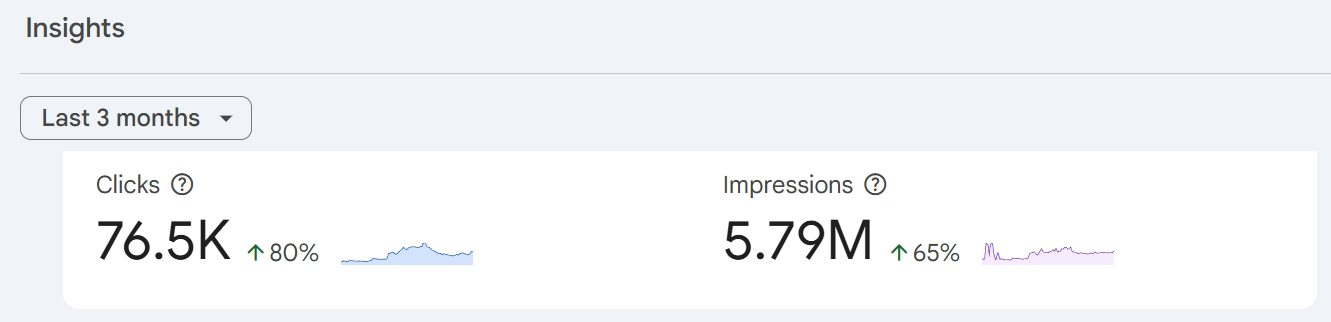
The selected May–December 2025 Search Console view for IRFĒ records 16.8M impressions and 265K search clicks. A separate Insights view in its September 2025 report shows 80% more clicks across the selected three-month comparison.
The case includes original graphs, individual editorial results and saved search appearances beside established fragrance publishers. Each figure is labeled with its source and reporting window.
What working together looks like
1. Establish the baseline
We review the site, available Search Console and Analytics data, existing content and the business priorities. Missing tracking is noted rather than replaced with assumptions. Access is limited to what the work needs.
2. Agree the first priorities
The first set of tasks should be small enough to execute and important enough to matter. You can see which pages or templates are involved, what will change and what needs your input.
3. Implement and check
Approved work is implemented or handed over with clear instructions. We check the actual output: content, links, indexing controls and important page behavior. A completed task is not simply a recommendation marked green.
4. Review and refine
Reporting connects the work completed with the pages and query groups being watched. We discuss what changed, what remains uncertain and where to put the next round of effort.
Reporting that separates visibility from outcomes
Search Console describes search visibility and clicks. Analytics provides a different view of visits and actions. Enquiries and sales answer the business question. We keep those levels distinct so that a rise in one is not quietly presented as proof of another.
A useful report names its period and explains the comparison. It distinguishes branded from relevant non-branded demand where the data permits, and looks at the pages that matter rather than relying on a sitewide average alone.
Where AI Search fits
Search visibility now also includes questions about how a business is described and cited in AI-generated answers. That does not erase the need for a clear, accessible website and useful content.
Our AI Search service adds a defined review of answer accuracy, source inclusion and observable referral traffic. It can share the underlying content and technical work with SEO while keeping its measurements separate.
Questions about SEO and local search
What is the difference between SEO and local SEO?
SEO improves how a website can be found and understood in search. Local SEO focuses on customers looking for a business in a particular area, connecting the website with accurate business information, relevant local pages and an eligible Google Business Profile. Many service businesses need both.
How long will it take to see SEO results?
There is no fixed timetable for SEO results. The starting condition of the website, competition, scope and pace of implementation all matter. We establish a baseline, agree the first priorities and review changes against that baseline rather than promise a ranking by a particular date.
Will SEOTEC implement the changes or send recommendations?
Implementation can be included in the agreed scope, or we can prepare specific tasks for your existing developer. We define responsibility before work starts and check completed changes, so a report is not mistaken for a finished improvement.
Do I need a separate page for every neighborhood I serve?
Not automatically. A separate area page should help customers with a distinct local need and reflect where the business actually works. Changing only the place name in otherwise identical text does not create a useful new page. Sometimes one clear service-area section is the better fit.
Scope, timing and the next step
An existing business website, a large content catalog and an ecommerce store need different amounts of work. We assess the site before recommending a scope or timetable. A focused audit, an implementation project and an ongoing program are different engagements, not interchangeable labels.
You retain a clear view of the work and its priorities. We do not promise a particular Google position or manufacture a deadline for results that depend on factors outside the site.
Bring us your URL, the services or products that matter most and the problem you want to solve. We will begin with a practical review and a useful next step.
Further reading
SEO Library · Service pages and supporting content · IRFĒ case study