
Website Analytics & Conversion Optimization
Know what happened. Know what to improve.
A dashboard should help you make a decision, not give you another set of numbers to look at. SEOTEC helps businesses review website measurement, understand the path to an inquiry and improve the pages that support it. The work connects Google Analytics, search reporting and practical inspection of the website itself.
Some projects begin with unreliable tracking. Others begin with useful traffic that does not appear to produce enough business. We separate those problems before recommending changes, so a reporting mistake is not confused with a website problem.
Decide what counts as a result
A page view, a click on a phone link, an accepted form submission and a qualified customer inquiry are different events. Before building reports, we agree on the business actions that matter and what the available systems can genuinely verify.
For a service business, that may mean understanding which pages lead people to a contact form, where a submission fails, and how completed inquiries are assessed afterwards. For an online store, the measurement plan may include product views, checkout behavior and purchases if the platform and data access support them.
The result is a measurement map: the action, the event or evidence used to observe it, its purpose and the checks needed before it is trusted. This also identifies the gaps. A phone-link click does not prove a conversation took place, and an email accepted by a server does not prove a sale.
AI citations and referrals need their own evidence.
Review the setup before interpreting the graph
We can inspect existing Analytics tags, event definitions, traffic filters, conversions or key events, and the connection between reports and the website. Existing accounts and useful history should be preserved rather than replaced simply because the site is being rebuilt.
Technical checks look for issues such as duplicate tracking, test traffic entering live reports, missing actions and personal information accidentally appearing in event parameters or page URLs. Where a change is needed, its scope and verification method are recorded.
Google Analytics and Search Console answer different questions. We use their reports together without expecting every total to match. Differences in what is counted, filters, dates and the route visitors take need to be understood before presenting a single growth story.
Follow the route from the first page to the next action
Conversion work starts with the actual pages. Is the offer clear? Can the reader find relevant proof? Is the next step visible and appropriate? Do forms work on a small screen? Are error messages understandable? Does the page require information the business does not yet need?
We examine the route from the landing page through service information, evidence and contact. A recommendation may concern copy, layout, internal navigation, form behavior or the relationship between an ad and its destination. Not every problem requires a redesign.
Changes are prioritized around the business goal and the evidence available. A clear technical failure is different from a hypothesis about a headline. We identify which is which, so the report does not dress every opinion as a proven increase in conversions.
Improvements that can be implemented
Depending on the agreed scope, deliverables can include a tracking inventory, event specification, corrected configuration, a prioritized conversion review and defined page changes. Implementation can be part of the engagement or handed to your existing developer with concrete instructions.
We prefer a small number of clear decisions over a long list of generic suggestions. For example: consolidate duplicate events, repair the failed submission state, align a service CTA with the correct contact route, then measure the next complete period. The order matters as much as the individual recommendations.
Testing is chosen to suit the site. An A/B test needs enough suitable observations and a defined question; it is not automatically the best next step for a low-traffic business. Usability checks, technical verification and careful before-and-after observation may be more practical. Their limitations should remain visible in the interpretation.
Search, AI referrals and business outcomes stay distinct
Search visibility can improve before its commercial effect is clear. An AI citation can appear without producing a measurable visit. Referral traffic can bring readers who are not yet ready to buy. Reporting should preserve those differences rather than combine them into one inflated success metric.
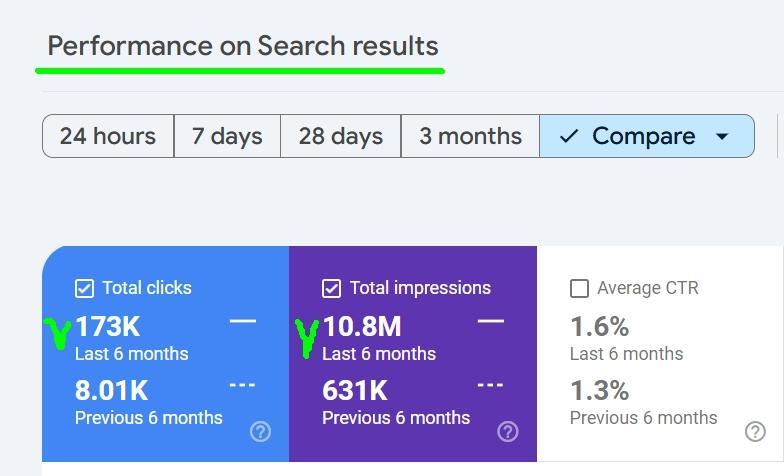
Our library explains how mentions, citations and referral visits can be observed separately. The IRFĒ case study illustrates another important principle: show the reporting period and original evidence, and keep Google Search, Discover and Analytics results distinct.
A defined review or an ongoing improvement program
A focused engagement can clarify a tracking problem or produce a prioritized website review. An ongoing program can combine reporting, selected implementation work and follow-up checks. The proposal identifies the systems, pages, access requirements, deliverables and review cadence.
Advertising spend, a full site rebuild, CRM implementation, call-tracking subscriptions and paid research tools are not automatic additions. Where a separate tool or project is necessary, we explain why before including it. We do not promise a fixed conversion increase from an untested change.
Questions about measurement and conversion
Should Google Analytics and Search Console show the same totals?
No. They measure different activity and apply different reporting rules. We use them together, checking dates, filters and what each metric counts before interpreting a difference. A mismatch on its own is not enough to diagnose broken tracking.
Does a click on the phone button count as a lead?
It records a phone-link interaction, not a confirmed conversation or qualified inquiry. To call it a lead, you need evidence of the next step. We distinguish page actions, accepted form submissions and business outcomes instead of relabeling every click as a customer.
Does a small website need A/B testing before anything can improve?
No. Clear technical failures and usability problems can be addressed without waiting for a split test. A/B testing needs enough suitable observations to support a useful comparison. For a low-traffic site, verified fixes and a carefully documented review may be the more practical starting point.
Make the next decision with better evidence
Send the website and the question you are trying to answer. We can establish whether the best starting point is a measurement review or a conversion-focused page assessment.